 In IntroBio, we talk a lot about prokaryotes and eukaryotes… but what is it that is important for us to say ? Having a nucleus is diagnostic, but it’s a symptom, not a description what’s special about being a eukaryote–it’s a lifestyle. I think there are several Big Ideas that allow students to categorize these huge groups successfully and to approach questions and thinking about them fruitfully. Eukaryotes have mastery of compartments–they ‘figured out’ how to separate watery chambers using non-watery components (membranes). Prokaryotes, on the other hand, have “specialization and mastery” at the environment or biochemical level (not covered yet). The topic of this post is a third: eukaryotes are damned complicated. It seems like everything has more parts and pieces. One view is that they’re simply designed to make undergraduate life a jungle of memorization. Is there another? (more…)
Category: Themes
-
Eukaryotes are complicated
-
You might be a mutant if… human mutations and phenotypes
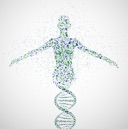
Students store Introductory Biology topics in ‘bubbles’, often unrelated to each other or the world the students inhabit. One challenging area where this happens a lot is mutation–how mutations happen, why mutations have consequences, and even the idea that mutations happen to ‘us.’ One of my favorite articles from the popular press had a title similar to “Blue eyes arose through human ‘mutation’ thousands of years ago”, with the word mutation offset in quotes–to indicate blue eye changes aren’t real mutations? In trying to make the concept more concrete and interesting to students, I’ve accumulated a series of human phenotypes (and primary literature sources) that amuse students while also driving key concepts home. The role of mutation in generating diversity and driving evolution is quietly but steadily made as well. -
Proteins and their functions: execution, modification
Why combine protein function and modification? There’s a reason so many study sites have flashcard features, and it’s not just because they’re easy to program. I think textbooks and lecture can create the impression that introductory biology is nothing but a steady stream of equally-weighted, isolated terms and ‘things’. By finding and teaching relationships, we not only make big concepts easier to see and grasp, we increase the likelihood that they’ll stick and that students will feel a growing sense of power in their grasp of course material. This post will cover a unit that I think ties together a concrete example of enzyme function (ATPase), environmental effects and mechanism of pH (which is further explored in another thematic collection here), and protein control via phosphorylation (which, intriguingly, is achieved through a mechanism related to… ATPase chemistry!).
-
Evolution in Introductory biology: cell/molecular semester
Many institutions divide Introductory Biology into Cell/Molecular and Ecology/Evolution semesters. There is some sense to this, in that one scale can be seen as cellular and smaller, the other organismal and larger. However, failing to weave the influences, evidences and implications of evolution into the cell-molecular semester wastes an opportunity to show students through our teaching of these topics how central these ideas are. Further, there are a wonderful molecular examples that represent powerful, approachable proofs and demonstrate to students what they can do if they pick up these tools. -
Teaching basepairing: consequences, applications
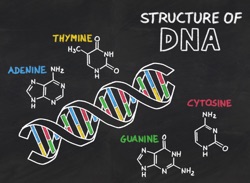
Everyone teaches something about basepairing in Introductory Biology, but sometimes it’s just in passing, with no greater emphasis than the diversity of sugar variants receives. But basepairing is the wellspring of life itself and lies at the heart of each of the major informational transactions (DNA replication, transcription, translation) as well as a diversity of more recently-discovered processes in regulation. More and more, we’re also seeing it as the great keystone of new therapies. What are the core concepts and how can we teach basepairing in order to showcase all of these aspects? -

Biological timers GTPases in translation, microtubules, signals
The main point in teaching with themes is to give students a meaningful sense of familiarity so that their travels from topic to topic are visits with friends and known quantities rather than onslaughts of fresh vocabulary and new un-anchored idea-pieces. One triplet that I have enjoyed using in introductory biology is the set combining 1) EF-Tu and its role in promoting accuracy in translation, 2) the GTPase timer in tubular that gives rise to the grow-catastrophe-disassemble cycle in microtubules, and 3) the ‘self shut-off’ timer features of many G-protein coupled receptors. These are evolutionarily related machines and each applies the concept of ‘timing’ to a different biological circumstance. Thus, besides providing three examples of how biological machines solve problems, this theme ties in to previous ones on ATPase (GTPase mechanism is identical; the attached base has nothing to do with catalysis) and evolution through duplication and modification.