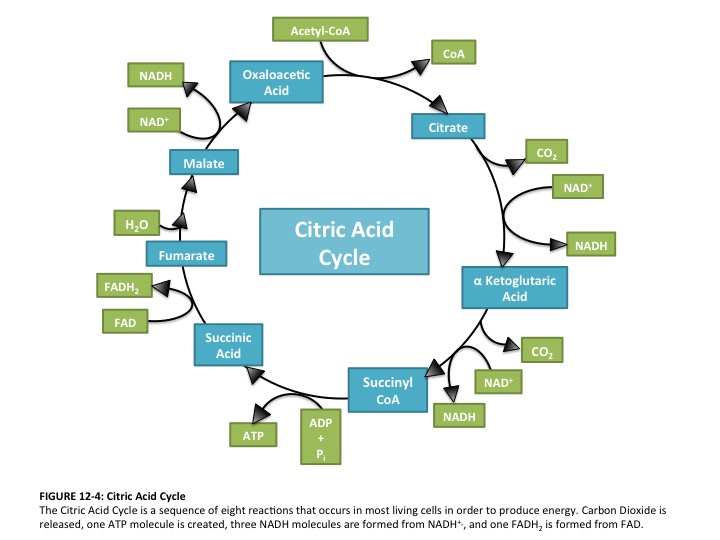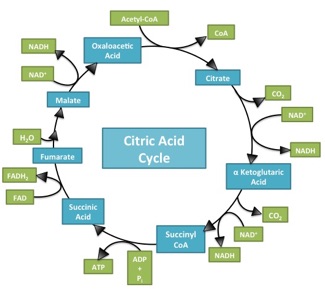
What makes the Citric Acid Cycle (Kreb’s cycle, TCA cycle) ‘hard’? Misdirection. When most of us sit down to learn something, the first question is usually “what is important here”. When trying to figure out a complicated process (Americans: think about the sport of cricket!), the questions are “What should I be looking at? And what am I seeing when I look there?”. It’s deeply ironic, then, that in looking at Introductory Biology textbooks, it’s incredibly difficult to spot an electron anywhere in representations of the citric acid cycle. This is bizarre, in that the cycle has only two jobs: 1) extract ‘high value’ (energetic) electrons, and 2) be a cycle so it can keep… cycling. A call for electron-watching and some suggestions for teaching electron flow through the citric acid cycle follow (Image source) Continue reading

 Having participated in teaching biology at a new place, I’ve completed a fresh run as an observer and found myself thinking a lot about introductory biology teaching decisions (the Bob Seger song “Against the Wind” has one of my favorite lines: “Deadlines and commitments/what to leave in… what to leave out.”). It occurred to me that there are two largely separable ways of teaching Introductory Biology that are quite different depending on what we want our students to be able to do. I believe the distinctions are not vastly unlike architects vs. engineers, or theoretical vs. applied physicists. It comes down to whether we want to be exposing our students to the how and why or the how-to and when-to. I’m almost exclusively in the former camp… but if we’re training medical students and technicians for industry, how much of ‘how does this work’ is needed? On the other hand, if we’re trying to attract and prepare P.I. (principal investigator)-level individuals and teach all comers ‘how life works’ alongside the wonders of what has evolved (and how), perhaps I can justify my approach.