After a long hiatus, I’m going to be dedicating a lot of the next six months (Feb-August 2017) to this site. Major projects include getting the first chapters of the Intro Bio eText usable (scientific method & Central Dogma players), porting more things to Web platforms (both the ‘VocabuWary‘ and Chapter Review tools are trembling on the edge of readiness), and updating the 3D menagerie to consolidate the tricks I’ve learned and start to realize the vision of letting students operate the viewing of and almost touch the molecules of life.
Author: Bruce
-
Biology: teaching theory vs. teaching practice
 Having participated in teaching biology at a new place, I’ve completed a fresh run as an observer and found myself thinking a lot about introductory biology teaching decisions (the Bob Seger song “Against the Wind” has one of my favorite lines: “Deadlines and commitments/what to leave in… what to leave out.”). It occurred to me that there are two largely separable ways of teaching Introductory Biology that are quite different depending on what we want our students to be able to do. I believe the distinctions are not vastly unlike architects vs. engineers, or theoretical vs. applied physicists. It comes down to whether we want to be exposing our students to the how and why or the how-to and when-to. I’m almost exclusively in the former camp… but if we’re training medical students and technicians for industry, how much of ‘how does this work’ is needed? On the other hand, if we’re trying to attract and prepare P.I. (principal investigator)-level individuals and teach all comers ‘how life works’ alongside the wonders of what has evolved (and how), perhaps I can justify my approach. (more…)
-

A machine to teach with: ATPase as a core cellular mechanism
Both studies and common sense indicate that common threads running through our teaching provide students with reinforcement of both thread components and the things they connect. This approach also highlights conveying principles rather than fact collecting as our learning objective. The details of a basic ATP hydrolysis reaction illustrate both key principles (how enzymes actually implement their abstract aspects [speed up reaction; lower reaction barrier], roles for specific amino acids and protein folding), value of understanding chemistry in thinking about biology) as well as providing students with a tool that they’ll see over and over… and over again: the core mechanism is found in nucleotide addition, kinase and phosphatase reactions, pre-mRNA splicing, the timing mechanisms of GTPases [tubulin, EF-Tu, GPCRs], and… oh yeah: virtually every ATP-driven or -coupled reaction in the cell! -

Teaching majors biology better: think non-majors biology
In my own little sphere, I’ve been fascinated by some of the contrasts between design and delivery of majors vs. non-majors biology courses. Non-majors courses are subjected to thoughtful cherry-picking: “What is most relevant to student lives or futures?”, “What has ties to society and their interests”, “What can we successfully convey in the allotted time?”. On the other hand, in teaching majors biology, I think there is a lot of pressure for the ‘kitchen sink through a fire hose’ approach: ‘everything’ must be force-fed to students at whatever pace necessary to get it ‘into their heads’, and there simply isn’t time for the extravagance of relevance or interest. I propose that teaching majors biology more along the lines of non-majors biology can make our students more interested and provide them with more knowledge and understanding when we’re done.
-
Pull yourself together! Self-assembly in biology
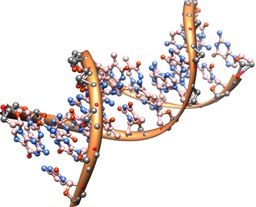
Lists of the ‘characteristics of life’ are a common element in introductory biology early lectures. Generally, these focus on movement, energy conversion, organization, etc.–all legitimate concepts. But the role of self-assembly in biology must not be underestimated; it’s a key feature of the flow of information in the Central Dogma (through the specific partnering of bases), folding of proteins from linear strings of amino acids (readily specified by linear structure of nucleic acids) gives rise to the functioning machines at the heart of almost all cellular work and action, and even membranes, while not members of the Central Dogma club, have function that relies critically on aspects of self-assembly. Without these properties, life would not only be impossible–they’re prerequisites for life to evolve from non-life. -
You might be a mutant if… human mutations and phenotypes
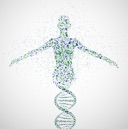
Students store Introductory Biology topics in ‘bubbles’, often unrelated to each other or the world the students inhabit. One challenging area where this happens a lot is mutation–how mutations happen, why mutations have consequences, and even the idea that mutations happen to ‘us.’ One of my favorite articles from the popular press had a title similar to “Blue eyes arose through human ‘mutation’ thousands of years ago”, with the word mutation offset in quotes–to indicate blue eye changes aren’t real mutations? In trying to make the concept more concrete and interesting to students, I’ve accumulated a series of human phenotypes (and primary literature sources) that amuse students while also driving key concepts home. The role of mutation in generating diversity and driving evolution is quietly but steadily made as well.