 Introductory biology can be overwhelming; what we consider to be ‘essential foundation’ could take up an entire undergraduate education. This issue is compounded when we treat the body of knowledge as a collection of names and facts (or when students achieve this view despite our efforts). By viewing the cell as a functioning machine, divided into compartments filled tasks performed by mindless but efficient mechanisms, a course can focus on understanding. A natural framework for student study and learning arises: the mechanics of the cell
Category: Sense of things
-
A mechanistic view of the cell: the glory of because
-
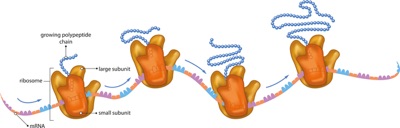
Translation in biology: the Sense of Things
Too often, we seem to act as if first year biology students aren’t ‘smart enough’ to understand things and that it would be ‘easier’ if we just told them the names of things and the order in which they operate. This matches up with no modern model of learning and assumes some magical transformation happens during their sophomore year. Instead, I think we should start them on a diet rich in concepts and unifying themes and ideas. In this first post of what I hope will be a series, I’ll lay out what I think the Big, teachable ideas in the biological process of translation are.